

As an Amazon Associate we may earn a commission from qualifying purchases made through links on this page.
The best cooperative board game for most groups is The Crew: Mission Deep Sea — a twenty-minute card game that costs less than a takeaway and solves the one problem that ruins co-op night. That problem has a name, and once you know it you will never buy a cooperative game the same way again: it is the quarterback, the player who works out the optimal move for everybody and then tells them what to do. Every co-op design worth owning is, underneath, an answer to that single question, and the games below are ranked by how well each one answers it.
The Real Question in Cooperative Board Games
A cooperative board game is one where everyone plays on the same side, against the game itself — you win together or you lose together. That much every list will tell you. What they rarely tell you is the failure mode, which is remarkably consistent: in a game where all information is public and all players share one goal, there is usually a mathematically best move available on any given turn, and if one person at the table is faster or more experienced, they will find it and announce it. Everyone else stops playing a game and starts taking dictation. Nobody is being rude; the design simply permits it.
Several of the co-ops on this list also have very good app versions, and for the heavier ones that is not a downgrade — the software handles the upkeep that makes them daunting in cardboard. Spirit Island, Mysterium and Root all adapt well; our roundup of the best digital board games sorts them by what the app actually fixes.
This is not a fringe complaint. Look at the honest pros-and-cons anyone writes about Pandemic, the game that made the whole genre mainstream, and “risk of one player dominating decisions” is on every one of them. The great cooperative designs of the last decade are, almost without exception, attempts to make quarterbacking impossible rather than merely impolite. There are four ways they do it:
- Ban communication. If you literally may not tell anyone what is in your hand, nobody can play your turn for you. This is the cleanest fix and it is why The Crew and Sky Team top this list.
- Make the players genuinely asymmetric. If your abilities are so different from everyone else’s that only you understand what you can do, advice from across the table stops being useful. Spirit Island is the extreme case.
- Hide the answer key from everyone. An app or an automated adversary that reveals the situation as you go means no player can see far enough ahead to dictate. Mansions of Madness works this way.
- Accept it, and pick the right table. Some games do not solve it at all, and that is fine when the group is a parent and a seven-year-old, where the “quarterback” is just a grown-up helping. Detective Charlie is deliberately in this bucket.
So the useful question is not “which cooperative game is best?” It is “which one is right for the people who will actually be sitting at my table?” A group of equally experienced gamers can play anything here. A group with one veteran and three newcomers should buy from the top of this list, not the middle. Below are nine games covering every player count from one to five, with what each one does about the quarterback, and who should skip it.
The 9 Best Cooperative Board Games, Ranked
1. The Crew: Mission Deep Sea
By: KOSMOS · Players: 2–5 · Time: 20 minutes

The Crew: Mission Deep Sea, and its predecessor The Crew: The Quest for Planet Nine, is a cooperative game that, unlike the others on this list, is a trick-taking game. You descend under the sea through a campaign of missions, and success depends on every single player completing their own objective, which means you have to work together to arrange who wins which trick. Players lay down cards from their hand, but cannot simply tell each other what they are holding.
The highest card of the suit led wins the trick — but the right person needs to win it for their mission to complete, and you are trying to work out what everyone else needs while pursuing your own. You can learn it in a round or two and replay it almost endlessly; the box holds a campaign of ninety-six missions that ratchet up in difficulty.
How it handles the quarterback problem: It removes it by rule. Each player gets exactly one limited communication token per mission, used to flip a single card face-up with a marker showing whether it is your highest, lowest or only card of that suit. That is the entire channel. Nobody can quarterback a hand they cannot see, so every player is genuinely solving their own problem — and the moment where someone plays the card you needed without being told is the best feeling in cooperative gaming.
Who should skip it: anyone who dislikes trick-taking outright, and any group that wants a board on the table — this is a deck of cards and nothing else. It also does not scale down well as a pure two-player game; at that count reach for Sky Team instead.
2. Sky Team
By: Le Scorpion Masqué · Players: 2 (strictly) · Time: 20 minutes
Full review: our Sky Team board game review — twenty minutes is the publisher’s own figure, and the review covers the age question the box does not settle
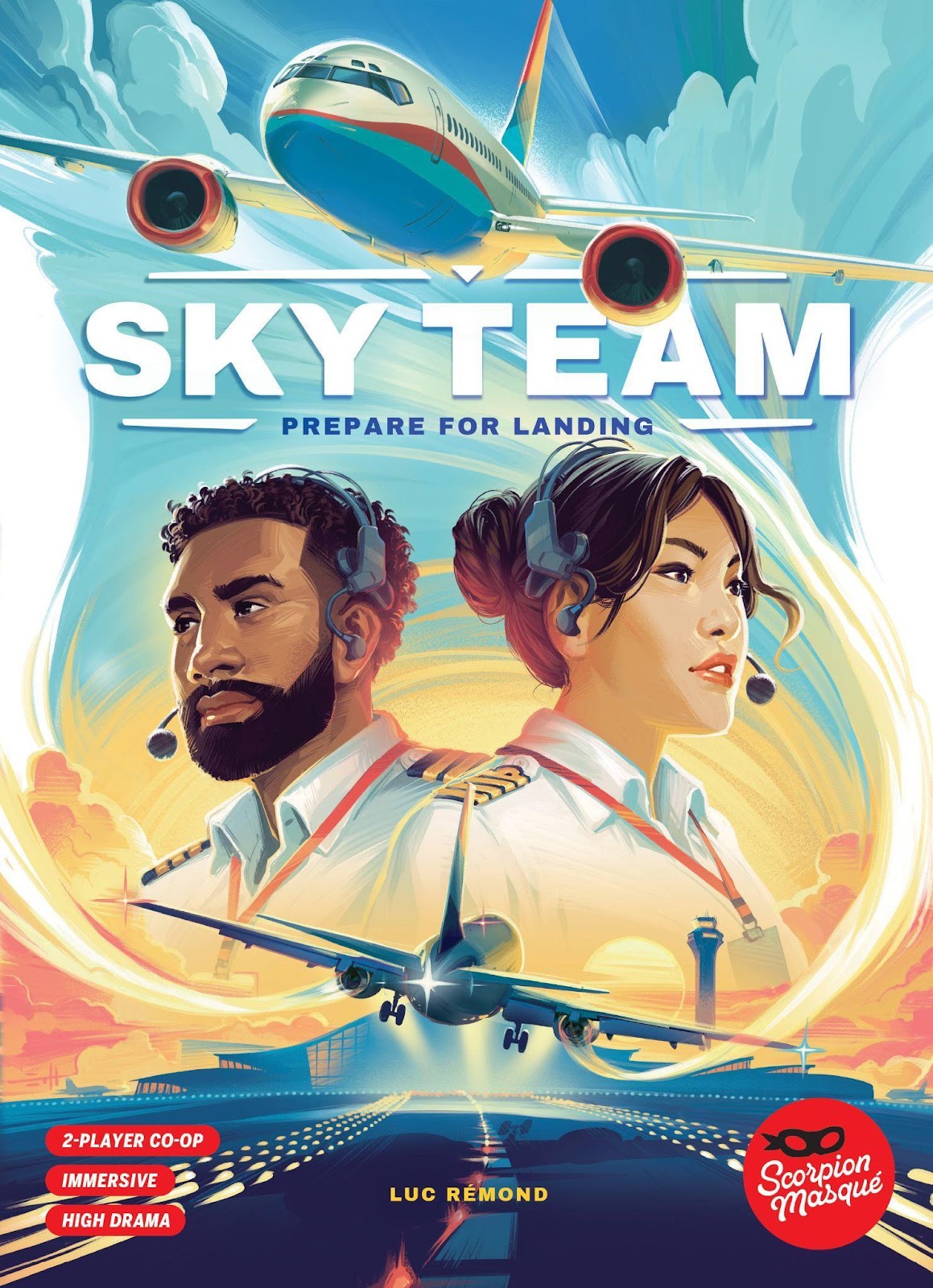
If you have ever wanted to land a passenger jet — or frankly even if you have not — Sky Team is worth your attention. A Spiel des Jahres winner, it puts you and one other person in the cockpit as pilot and copilot, trying to bring an aircraft down safely. You may discuss a plan before each round, then you roll your dice behind a screen and place them on the cockpit board in silence: flaps, landing gear, engines, brakes, the axis of the plane.
If you have read each other correctly, the numbers balance and the plane settles onto the runway. If not, the alternative is an almighty crash. It is easy to learn, quick to teach, plays in about twenty minutes, and is one of very few genuinely excellent games designed for exactly two people — see our two-player board games guide for the wider field. It is also available on Board Game Arena if you want to try before buying.
How it handles the quarterback problem: Same cure as The Crew, applied to two players. You agree a plan out loud, then the dice go behind the screen and the talking stops — so your partner cannot tell you what to place once they know what they rolled. The tension comes entirely from guessing whether they understood the plan the same way you did.
Who should skip it: groups. This is a two-player game with no three-player mode and no way to fake one, so it is the wrong buy for family game night with four people. Skip it too if repeated failure frustrates you — the early scenarios are gentle, but the campaign gets genuinely punishing.
3. Spirit Island
By: Greater Than Games · Players: 1–4 · Time: 90–120 minutes

Spirit Island is the cooperative game that no list is complete without. Each player takes the role of a spirit of the land defending an island from colonizing invaders, using a completely different set of elemental powers to do it. Each turn the invaders explore, build and then ravage — a visible, escalating clock — and your job is to disrupt that cycle by playing power cards paid for with energy, removing invaders or frightening them off the island entirely.
It is thematically rich and mechanically dense, with real strategy in every turn, and it is emphatically not a first board game: there is a lot to track and a lot that goes wrong if you do not stay on top of it. For a confident group it is worth every bit of the overhead. It also has one of the best solo modes in the hobby.
How it handles the quarterback problem: Asymmetry so severe it becomes the answer. Every spirit has its own board, its own growth options and its own innate powers, and they play nothing alike — a player running Lightning’s Swift Strike genuinely cannot tell the player running Ocean’s Hungry Grasp what to do, because understanding one says almost nothing about the other. What replaces quarterbacking is real negotiation: each player explains what they can cover, and the table works out which threats go unanswered.
Who should skip it: new players, and anyone who wants a game that fits in an evening alongside dinner and conversation. The first play is genuinely hard work. If the asymmetry is the part that appeals, our roundup of the best board games like Spirit Island covers what else scratches that particular itch, because very little does.
4. Mansions of Madness
By: Fantasy Flight Games · Players: 1–5 · Time: 120–180 minutes
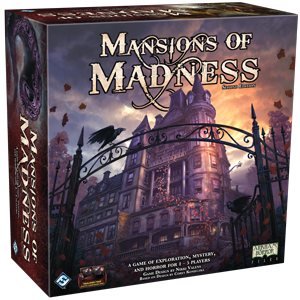
Mansions of Madness — specifically the second edition — is one of the great cooperative games, and it is brilliant for gamers of all kinds. It is set in the Lovecraftian 1920s, and you are investigating a house where something from the mythos is waiting. You enter your actions and discoveries into a companion app, which narrates the story back to you and decides what happens next.
It is also a campaign game, delivering a thematic, cohesive experience across multiple sessions. Open a door and you are prompted to lay a new map tile, so the house physically grows in front of you as you explore it. Even when you know how a scenario ends, the route there changes.
How it handles the quarterback problem: The app holds the answer key, and no player does. Because the game reveals its situation only in response to what you actually do, nobody at the table can calculate the optimal line — there is not enough information on the table to calculate from. That converts the veteran player from a dictator into a guide, which is a much better role for them.
Who should skip it: anyone who does not want a phone or tablet in the middle of their board game, and anyone who cannot reliably find three hours. It is also expensive, and the app is required rather than optional. For campaign play more generally, our best campaign board games list has the alternatives.
5. Gloomhaven
By: Cephalofair Games · Players: 1–4 · Time: 1–2+ hours · Age: 13+

Gloomhaven is a modern board gaming legend — it smashed Kickstarter records and has occupied dining tables for months at a time ever since. Described by some as an RPG in a box, it is a campaign of over ninety scenarios in which you play mercenaries with their own abilities and their own evolving personal stories.
It takes what is fun about a roleplaying game — forming a party, going on quests you might fail, growing your character, making choices that stick — and removes the need for anyone to be Games Master, so everybody plays. Plot reveals land as you reach them, and no two groups take the same path through the campaign. The price of that is a lot of components and a lot of setup.
Buy the current edition. Cephalofair now sells Gloomhaven in a second edition, which is the version on their own store today — the publisher lists it as 1–4 players, ages 13+, one to two-plus hours per scenario, with a complexity rating of High. If you want a much smaller way in, Gloomhaven: Jaws of the Lion is the designed-for-beginners entry point and is a far better first purchase for most people. Frosthaven is the full-size sequel, and it is bigger, not gentler.
How it handles the quarterback problem: Partially, through hidden simultaneous selection. Every round each player secretly chooses two cards from their own class-specific hand and they are revealed together, so the table cannot plan a turn in lockstep — and the game explicitly limits how precisely you are allowed to describe what you are about to do. It is not airtight, and a determined veteran can still steer, but it is far better than an open-information game.
Who should skip it: anyone without a committed group and a table they can leave set up, and anyone who is buying it as their first co-op. The campaign is a months-long commitment, and the most common outcome for a Gloomhaven box is that it stops being played around scenario fifteen. Our board games like Gloomhaven list covers the lighter alternatives.
6. Horrified
By: Ravensburger · Players: 1–5 · Time: 60 minutes

From horrors unknown to horrors well known — Horrified, despite the name, is a light family game in which the whole table works together to defeat classic monsters. It is not really a horror game: depending on the version, you are facing the Universal Monsters (the Mummy, Dracula, the Wolf Man) or Greek myth (Medusa and company), all of them familiar rather than frightening.
What it does unusually well is difficulty. It is not so easy that you win every time, and it is not so simplistic that adults feel patronized — which is genuinely rare in games pitched at families. Each monster has its own defeat condition, so you are solving several different puzzles at once, and you choose how many monsters to face, which is the cleanest difficulty dial on this list.
How it handles the quarterback problem: Barely at all — and it is the right pick anyway for a specific reason. The board state is completely open, so a strong player can absolutely run the table. But the puzzle is legible enough that a ten-year-old can see why a move is good once it is explained, which turns the veteran into a teacher rather than a dictator. That is the trade to make with mixed ages.
Who should skip it: a table of experienced gamers looking for a real challenge — they will solve it and move on. Skip it too if your group contains one person who cannot resist optimizing, because nothing in the rules will stop them.
7. Detective Charlie
By: LOKI · Players: 1–5 · Time: 25 minutes · Age: 7+
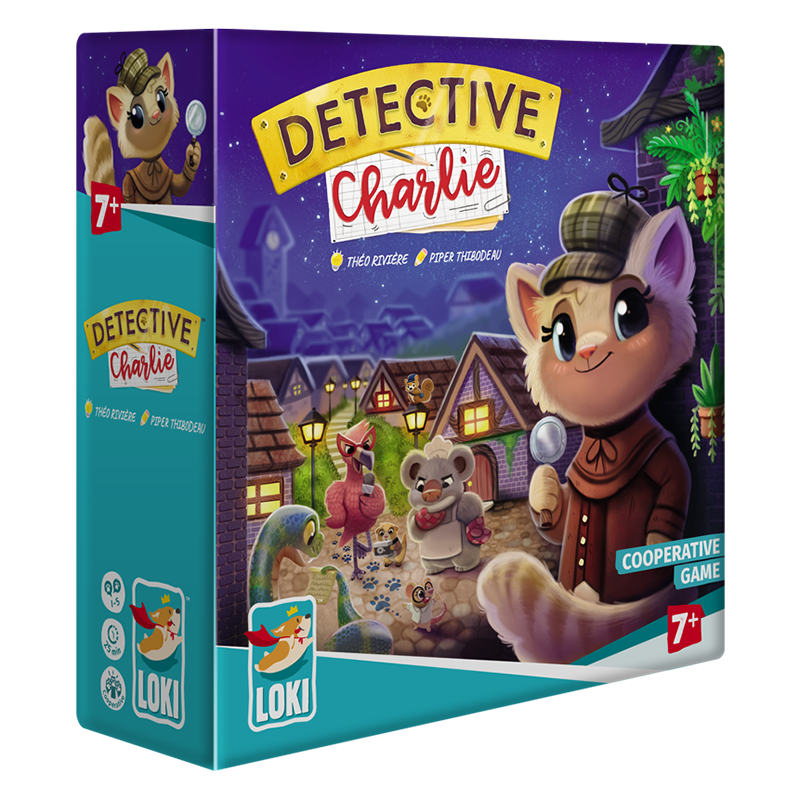
Another excellent cooperative game for families, this time aimed squarely at a younger audience. Detective Charlie is an investigation game for children of about seven and up, from a designer with a strong modern catalogue — from Sea Salt and Paper to The LOOP.
Something has happened in a little world of talking animals, and the table plays Detective Charlie together, working through cards to identify the culprit. It is a cozy game, with mysteries designed to make you smile rather than to generate suspense, and components vivid enough to hold a child’s attention. Replay value is limited — you do work through the cases — but it is a delight while it lasts.
How it handles the quarterback problem: It does not try, and that is the correct design decision. The intended table is an adult and a child, where the adult steering gently is the point; the game is a vehicle for a seven-year-old to feel like they solved something. Judging it by the standard applied to The Crew would be judging it for the wrong room.
Who should skip it: adults playing without children, who will find it slight, and families whose kids have already outgrown gentle deduction. If the children are younger or you want more options, our cooperative board games for kids guide is the right shelf.
8. Pandemic
By: Z-Man Games · Players: 2–4 · Time: 45 minutes
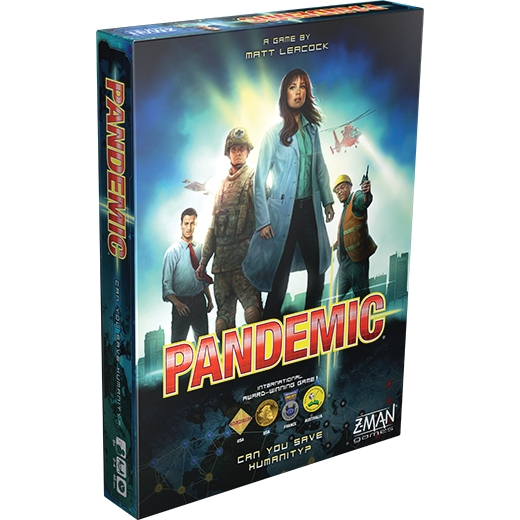
Pandemic is the best-known cooperative board game ever made, and it is the reason most people reading this know the genre exists. Four diseases are spreading across the world; you and your fellow players fly between cities treating outbreaks and collecting the card sets needed to cure each disease before the board gets away from you. Each player has a role with a special ability, which is where the replay value lives.
It remains a genuinely good game and a landmark design. There are now many versions — the Legacy campaigns in particular are superb and could justify their own entry — but the original is still the cleanest expression of the idea.
How it handles the quarterback problem: It does not, and this is the honest reason it sits at number eight rather than number one. All information is public, all players share one goal, and there is very often a single best sequence of moves available — so the most experienced person at the table tends to find it and direct traffic. Every fair assessment of Pandemic lists exactly this among its drawbacks. It is still the right buy for a group of roughly equal experience, and it is a poor buy for a group with one expert in it.
Who should skip it: a table where one player is much stronger than the rest, unless that player is disciplined about staying quiet. Skip it too if you dislike losing to a card flip, which does happen. If you have played it out, our cooperative board games like Pandemic list is the natural next step, and gateway co-ops like Forbidden Island covers the lighter end of the same family.
9. Slay the Spire: The Board Game
By: Contention Games · Players: 1–4 · Time: about 45 minutes per player
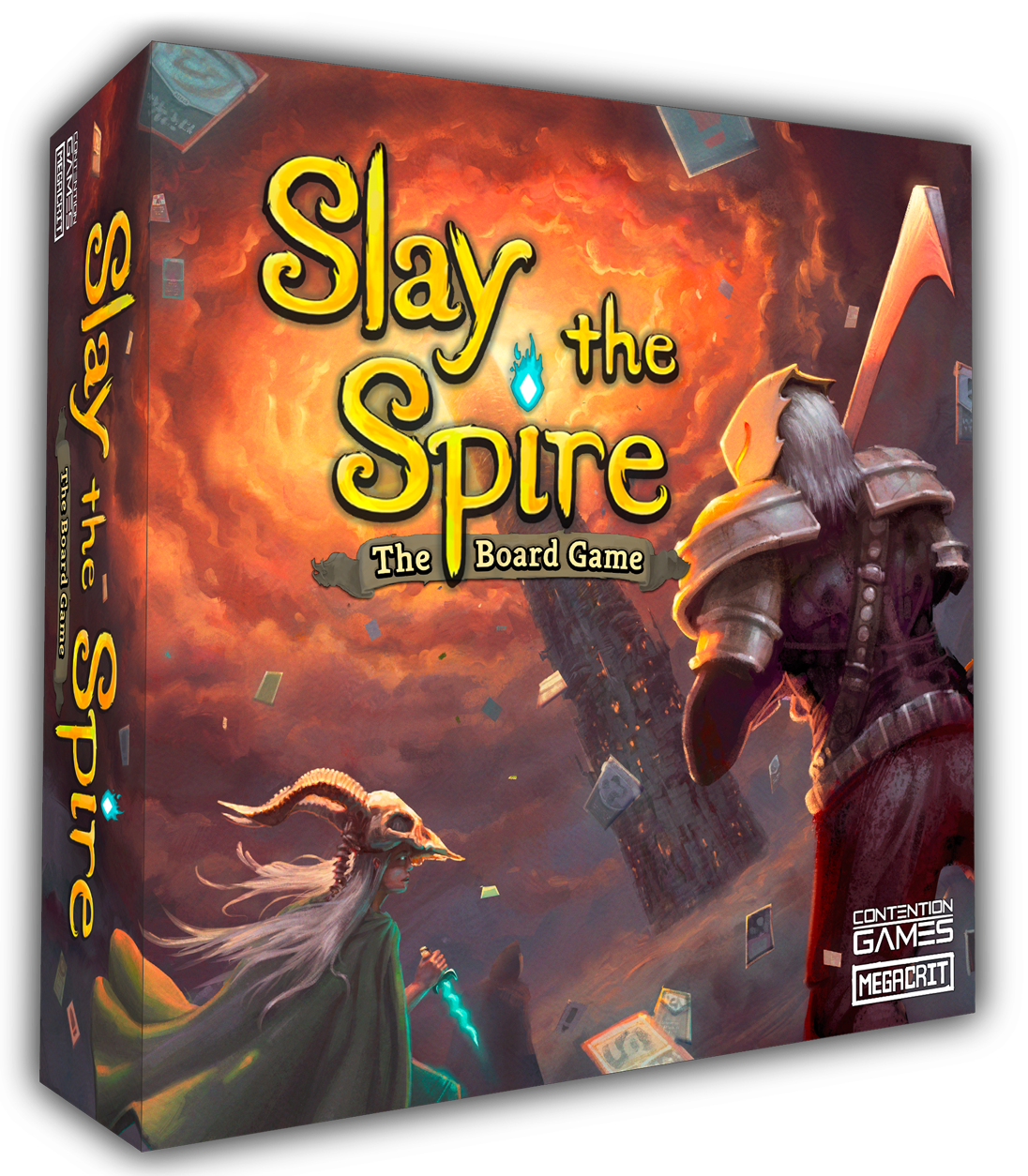
Plenty of video games have become board games and the results vary wildly — many trade on a recognizable license rather than building something interesting in its own right. Slay the Spire is a case of it going well. The original was a digital deck-building roguelike: you start with a weak pool of cards and a character skill, and climb a spire by defeating the monsters on each floor, adding and improving cards as you go.
With those deck-building roots it was an obvious candidate for a tabletop version, and the adaptation manages to keep the satisfaction of both beating the next fight and assembling a deck that finally works, without drowning you in administration.
How it handles the quarterback problem: Structurally well, almost by accident: each player runs their own character, their own deck and largely their own fights, so there is not much for anyone else to direct. The flip side is that this is the least cooperative game here — it is closer to several people playing solo games in parallel and pooling the outcome, which some tables love and others find lonely.
One thing to check before you buy. Slay the Spire exists as a video game on several platforms and as a separate physical board game from Contention Games, and the two are easy to confuse in search results. If you want the tabletop version discussed here, make sure the listing says board game and names Contention Games as the publisher.
Who should skip it: anyone who wants a genuinely shared experience — the co-op mode is real but the game is at heart a solo climb, and it is best known and best loved that way. If solo play is actually what you are after, our best 1 player board games list is the better place to start.
The Nine Co-ops at a Glance
| Game | Players | Time | How it handles the quarterback | Best for |
|---|---|---|---|---|
| 1. The Crew: Mission Deep Sea | 2–5 | 20 min | Communication banned by rule | Card-game groups, any experience mix |
| 2. Sky Team | 2 | 20 min | Silent dice placement | Couples and two-player nights |
| 3. Spirit Island | 1–4 | 90–120 min | Extreme asymmetry | Experienced groups; superb solo |
| 4. Mansions of Madness | 1–5 | 120–180 min | App hides the answer key | Story-first groups with an evening |
| 5. Gloomhaven | 1–4 | 1–2+ hrs | Hidden simultaneous card choice | Committed campaign groups |
| 6. Horrified | 1–5 | 60 min | Not much — but the puzzle is teachable | Mixed ages and family nights |
| 7. Detective Charlie | 1–5 | 25 min | Deliberately not — adults help | Kids aged about 7+ |
| 8. Pandemic | 2–4 | 45 min | Not at all | Groups of equal experience |
| 9. Slay the Spire | 1–4 | ~45 min/player | Everyone runs their own climb | Solo players and deck-building fans |
Cooperative Board Games for Large Groups
Most cooperative games cap out at four or five players, and for a good reason — the quarterback problem gets worse with every extra person, because a bigger table means more waiting and more temptation to speed things along by just telling people what to do. If you need to seat more than five, split into two tables rather than hunting for a seven-player co-op. These handle the upper end best:
- Forbidden Island and Forbidden Desert: retrieve four treasures before the island sinks or the desert buries you. Cheap, quick, and the best gateway co-ops there are — Forbidden Desert is the better game of the two.
- Horrified: five players, an hour, and a difficulty dial you set yourself. The most reliable pick above for a mixed-age crowd.
- Mysterium: one player is a ghost communicating only through surreal illustrations while everyone else interprets. The restricted communication is doing the same job as it does in The Crew, which is why it works at higher counts.
- The Crew: Mission Deep Sea: five players, twenty minutes, and no quarterbacking possible. Still the answer more often than not.
Cooperative Board Games for Solo Players
There is a neat irony in cooperative games: because they are built to be beaten by a team rather than by an opponent, most of them work perfectly well when the team is one person. Solo play also sidesteps the quarterback problem entirely, which is why so many co-op fans end up playing alone. These are the strongest solo experiences here, and our best 1 player board games guide goes deeper.
- Spirit Island: widely considered one of the best solo games ever designed. Running two spirits alone is the standard way experienced players get the full game without a group.
- Gloomhaven: the campaign works solo, usually by running two characters, and the story survives the change intact.
- Slay the Spire: the one on this list that is arguably better solo than cooperatively.
- Pandemic: play two or more roles yourself. It loses the social element but the puzzle is unchanged.
Going Deeper into Cooperative Games
This page is the starting point for cooperative gaming on this site, and each of the games above opens onto a fuller guide. If Pandemic is your entry, cooperative board games like Pandemic is where to go next, and gateway co-ops like Forbidden Island covers the lightest, cheapest end of the genre. If Spirit Island hooked you, our best board games like Spirit Island roundup works through what else offers real asymmetry, and there is very little. If Gloomhaven is the shape you want, see board games like Gloomhaven and our best campaign board games list. Playing alone, start with 1 player board games. Playing with children, start with cooperative board games for kids. And for two people specifically, two-player board games and board games for couples both go further than this page can.
Not sure which co-op fits your table?
Get our free Top 10 Must-Have Games guide — ten games we would actually buy again, with the honest case for each. No hype, no spam, just games worth the evening.
Conclusion
Cooperative games have gone from a curiosity to one of the strongest categories in the hobby, and the roster above covers every shape of table: two people in a cockpit, a family with a ten-year-old, a group of veterans who want to be beaten up by an island, someone playing alone on a weeknight. If you take one thing from this page, make it the buying test rather than the ranking. Ask who will be sitting at your table, and whether the game you are considering makes it possible for one of them to play everyone else’s turn. If the answer is yes and your group is evenly matched, buy it and enjoy it. If the answer is yes and it is not, buy The Crew instead — it costs about fifteen dollars and it will get played more than anything else here.
Cooperative Board Games FAQ
What is the best cooperative board game?
The best cooperative board game for most groups is The Crew: Mission Deep Sea, a trick-taking card game for 2–5 players that runs about 20 minutes. It wins because its rules forbid players from telling each other what is in their hands, which prevents one experienced player from directing everybody else’s turns — the most common way cooperative games go wrong. It is also among the cheapest games on this list.
What is quarterbacking in cooperative board games?
Quarterbacking is when one player works out the best move for the whole table and then tells everyone what to do, turning a cooperative game into an audience. It happens because most co-ops share one goal and show all information openly, so a single optimal line often exists. The best modern designs prevent it by restricting communication, giving players very different abilities, or hiding information behind an app.
Are cooperative board games good for families with young children?
Yes — Horrified and Detective Charlie are both built for family tables, with Detective Charlie playable from about age 7 and Horrified working well from around 10. Both are open-information games, so an adult can help without breaking any rules, which is a feature rather than a flaw at those ages. For younger players specifically, look at dedicated cooperative games for kids.
Can cooperative board games be played solo?
Most cooperative board games play well solo, because they are already designed to be beaten by a team rather than by an opponent. Spirit Island, Gloomhaven, Pandemic and Slay the Spire all have strong single-player modes, usually by running two characters yourself. Solo play also removes quarterbacking entirely, which is one reason many co-op enthusiasts end up playing alone.
How long do cooperative board games take to play?
Cooperative board games range from about 20 minutes to over three hours. Sky Team lands a plane in roughly 20 minutes and The Crew plays in about the same, while Horrified and Pandemic sit near the hour mark. Spirit Island runs 90–120 minutes, Gloomhaven takes one to two-plus hours per scenario across a long campaign, and Mansions of Madness can reach three hours.
Cooperative play and asymmetry solve each other’s problems, which is why Spirit Island sits at the top of our guide to the best asymmetric board games: a shared victory condition is exactly what makes wildly different player powers cheap to teach.
The Gloomhaven entry here is the full 2nd Edition box, and it is not the box most co-op groups should start with. Is Gloomhaven worth it in 2026? ranks the four boxes Cephalofair actually sells by what each one asks of your calendar — the $59.99 Jaws of the Lion is the right answer far more often than the $199.99 flagship.